


The hard part about technical disruption like we are facing is reimagining things. How do you imagine the unimaginable?
“If I had asked people what they wanted, they would have said faster horses.”
There is no evidence that Henry Ford actually said this verbatim. But the folk legend is treated as fact because it so accurately encompasses his philosophy. Said another way, “People ask for better versions of what they know. Leaders build what they do not yet know they need.”
Here are the underlying ideas:
Customers imagine improvements to what they already know
People frame needs in the language of existing solutions.
Visionary innovators identify the underlying needs
Ford recognized the real need was faster, cheaper, more reliable transportation — not better horses.
Breakthroughs come from redefining the problem
The automobile solved the transportation problem far beyond incremental improvement.
Market research alone is insufficient
Customers cannot imagine solutions that do not yet exist.
Reimagining is hard. Our educational institutions are focused on the delivery of the right answer. We’ve created a system that rewards regurgitation rather than insight. We teach problem solving rather than problem discovery. Unfortunately, the next thing is never a faster version of the current thing.
It is the rare teacher who seeks to be challenged. Modern transformation failures are rarely technical. They are failures of: imagination, framing, and system redesign.
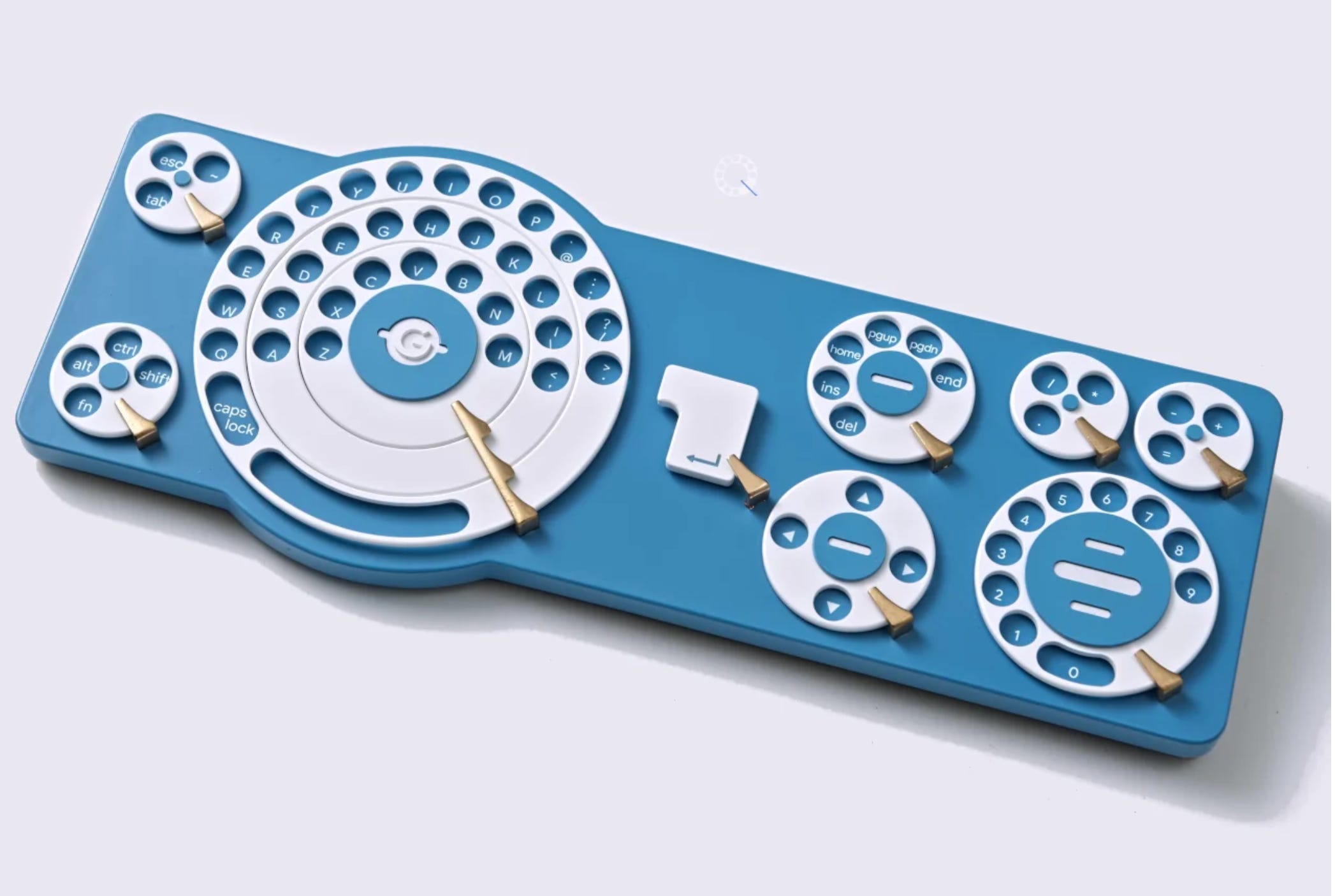
My favorite example is the keyboard. The image at the top of the article is a classic attempt to build a faster horse. It’s Google Japan’s GBoard Dial Version. The basic flaw of a keyboard as an input device is that it’s a keyboard. You can’t solve the fundamental problem by redesigning the 19th Century technology that causes it.
Over 150 years old, the keyboard forces thought to flow at the speed of fingers. (In my case, that’s very slow.) Designed as a typesetting device (where it was a new way of doing things), this primary tool hobbles our ability to fully utilize the computing capacity we already have. While there are a few fledgling attempts to close the mind computer gap (Neuralink, for example), none show real progress towards the elimination of this fundamental bottleneck.
As a result, we are stuck with 50 year old metaphors for our relationship with our machines. In case you haven’t noticed, your monitor is not a desktop at all. The idea of the desktop is a metaphor designed to make relating to a computer easier. The struggle to break free of that metaphor is part of why AI seems simultaneously foreign and natural.
The unreasonable demand that AI should be instantaneously profitable and widely adopted is the actual bubble. Technology revolutions move slowly until they move quickly. In the keyboard’s case, it’s very slowly.
Listen for ideas that seem outlandish. The next thing is going to sound simplistic, be of low quality intially, and take meaningful amounts of time to be digested. Right now, we are getting faster horses. We are using new tech to make dumb things into faster dumb things.