


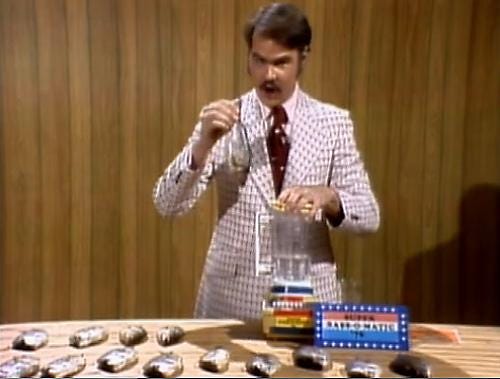
In 1949, Vitamix aired what is often considered the first infomercial. A 30-minute Vitamix demonstration from that era feels like a period piece. A W.C. Fields lookalike explains how the expensive blender can turn whole wheat, rice, soybeans, and corn into flour. The sales pitch is instantly recognizable: benefit after benefit, layered one atop another.
Value stacking is the technique of adding benefits one at a time as a sales process. It works because it reframes the decision. Instead of asking whether to buy, the prospect begins asking what they’ll miss if they don’t. This is the heart of an infomercial.
Rather than merely lowering prices, a company layers supplementary benefits, perks, or bonuses into a comprehensive package. Continuously adding complementary items—such as expert guidance, additional resources, templates, or cheat sheets makes the core price feel fair and highly compelling.
Modern SaaS marketing often uses the same technique: templates, playbooks, communities, coaching, and bonus resources are bundled around a core product to make the offer feel irresistible.
The same logic is beginning to shape online publishing.
Have you noticed that posted material is growing longer and longer and more and more frequent? There is a feedback loop between algorithmic engagement and texts powered by ‘AI as a performance enhancing technology.’ When quality is difficult to measure automatically, length becomes an easy substitute. It’s engagement versus information.
When length is confused with depth in this way, there is a big incentive to go longer. And, I see that in the increasingly long but shallow material that makes its way to my feed. I assume we are all buried in it.
They look like infomercials for personal brands. Like classic infomercials, they accumulate lessons, frameworks, anecdotes, and promises one layer at a time. Every additional paragraph functions as another bonus.
The rhetorical structure is familiar:
“But wait, there’s more.”
“And that’s not all.”
“What could you possibly be waiting for?”
The goal is the same as it was in 1949. Keep the audience engaged long enough that the question changes from “Do I need this?” to “What might I miss if I stop paying attention?” The modern infomercial isn’t selling blenders. It’s selling attention.