



It’s been awhile.
When I moved to California, my two oldest kids and I (they were 8 and 10) camped across the country. It was a reprise of my first cross country road trip… east coast to Denver to Tuscon to LA to San Francisco. It was a privilege to watch their faces as they saw the unimaginable geography and geology of our country.
As we left Arizona and headed to LA, we went from the darkness of the desert night into the bright lights of the megalopolis. The Beach Boys informed that leg of the trip. We ended up staying the night in Anaheim, across the street from Disneyland.
The next morning we tackled the amusement park. While there were a number of magic moments, Space Mountain stands out clearly in my memory. I’m quite tall and most of my height is in my torso. I slouched down in the seat so that I wouldn’t get decapitated on the ride.
That’s the kind of thing the ride’s designers hope you feel.
Space Mountain is all about disorientation. It is a fast, smooth indoor roller coaster that uses darkness, sound, and carefully controlled lighting to convince your brain that you are flying through space at impossible speed. The ride lasts only about two minutes, but the sensory experience makes it feel longer.

Your eyes never adapt because there is almost nothing to see. Tiny stars appear overhead. A comet flashes past. A spiral galaxy rotates off to one side. Your brain desperately tries to construct a horizon, but there isn’t one. The track twists left. Then right. You bank sharply. A small drop feels much larger because you cannot see it coming.
Occasionally a glowing planet appears close enough to seem reachable before vanishing behind you. Meteor streaks flash by. Blue-white stars whip overhead. Brief bursts of light reveal just enough of the track to heighten anticipation before darkness swallows everything again.
You see just enough to almost get oriented. Then it gets dark again. The glimpses of stars, planets, and (occasionally) the track create a sense of coherence that keeps escaping.
AI feels just like that.
This morning ChatGPT spent a bunch of energy telling me how smart I am and how unique my ideas are. It glossed right over the inconsistencies and incoherence of my forming notions. Like Space Mountain, it harnessed my mind’s desire for clarity to create an illusion.
It takes serious work to see that the darkness is central to the illusion. It happens much faster in AI, but the trick is the same. Unlike Space Mountain, AI has no lines and wants to keep me on the ride for as long as possible.
I can’t begin to tell you how deeply I enjoy exploring ideas with all of the LLMs. It’s fast, responsive, and shallow. It spends its time looking for the fastest way to please me.
Unlike Space Mountain, I try to use LLMs for work. To do so, I have to continuously route ideas through all three of the tools I use regularly. I get an answer in one place and then ask a different LLM to review and critique the idea. Then I do it with a third LLM. What I gain from that process is a clearer understanding of what I’m missing.
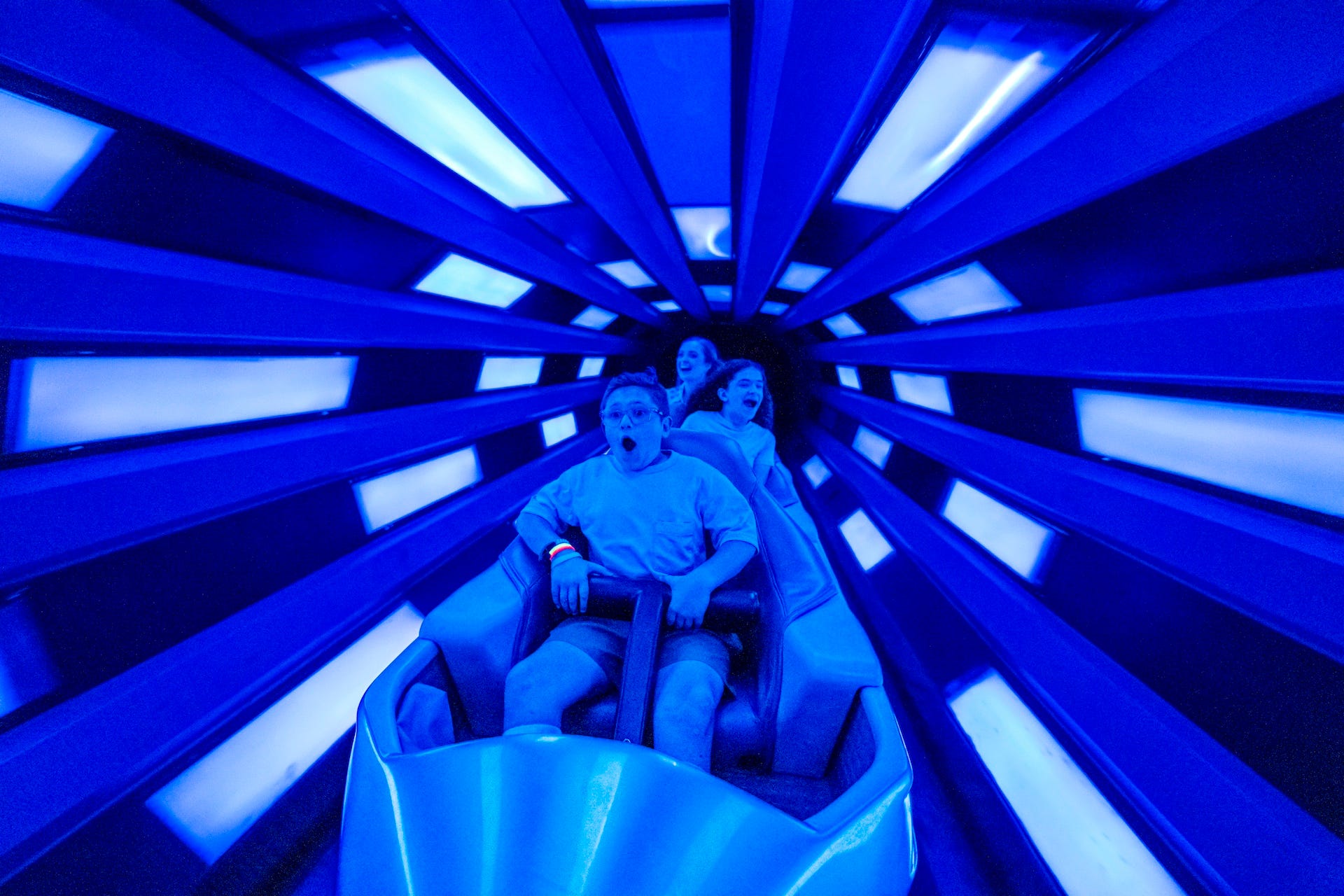
What I’ve discovered is that using three LLMs isn’t really about getting a better answer. It’s about getting off the ride.
Each model has its own blind spots and its own ways of flattering me into believing I’ve reached clarity. When they disagree, the darkness becomes visible. The contradictions are the point. They tell me where I still have work to do.
Space Mountain ends when the lights come on and you roll back into the station. You realize that what felt like an impossible journey happened inside a carefully designed building. AI doesn’t have that moment. The ride has no natural ending. It will happily keep generating confidence long after it has stopped generating understanding.
The job isn’t to find the smartest model. It’s to build habits that make the darkness visible. Curiosity isn’t enough. Skepticism isn’t enough. You need a way to step outside the illusion and ask what you’ve missed.
That’s where the real work begins.
Photo by Logan Voss on Unsplash
John, thank you for the article. With the beginning of my sabbatical in March, I now make the time to read the writings of those I enjoy. You’ve always been on my short list.
I’m grateful to know that others conduct their LLM work through more than one platform. Over the past several months, I’ve used your process to evaluate - so far -five different platforms. I subscripts to two at a time. During the initial 30 days, it’s head to head - both running parallel prompts and evaluating what has been generated by one vs. the other. I’ll start the second 30 day cycle, continuing with the “winner” from round 1 and replacing the “loser” with another LLM platform. After 30 days, round 3 begins, with the round 2 winner taking on the next LLM. At any given time, I’m paying licenses for two LLM, as well as accessing “free” versions of remaining three I’ve already analyzed. The value of this exercise was - to me - a chance to “test drive” the five most popular LLMs in head-to-head testing.
You nail perfectly the inherent obsequiousness of these LLMs. Even with explicit guidance to be critical and challenge my default assumptions, I still find occasions when I’ve gotten well down the path of a detailed analysis only to have the LLM - as part of a late process check - “tell” me that what we’ve developed has previously undisclosed flaws or issues that call into question much or all of the analysis completed. Any ways you’ve found to overcome this?
\