


I just finished two new books that I needed and had no idea how much.
They’re not on the same topic and don’t seem to be related, but they both do a magical thing—they helped me reframe how I was seeing things. I have been shifting between, fury, grief, and depression. Let’s just say I am not okay when people abuse power and harm others deliberately. And I’ve been seeing a lot of it.
These two books really helped. One was a call to action; the other was a call to self-reflection. Both demanded reframing things and thinking critically. I was a little tired and cranky about doing that, but it was worth it because it worked.
The first is Scott Berkun’s new book, How to Live, Rules for People Who Don’t Like Rules. I definitely qualify.
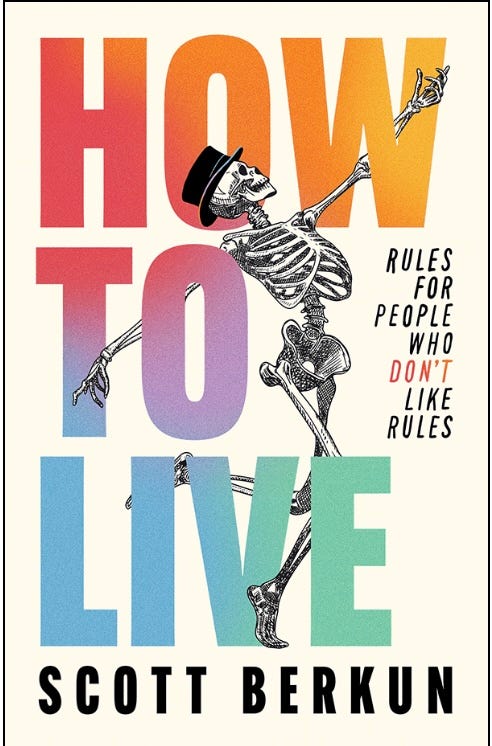
It starts out when Scott was in high school and talked back to a teacher. He was sent to the dean’s office—the ultimate punishment. But nobody was there. So he waited a bit, shrugged, and left. And nothing happened. It was evident that he had broken some essential rule. But when nothing happened, it got him thinking about rules.
He draws on many of the great thinkers to figure out what are the rules that help us live, starting with, “Don’t die.” It seemed obvious except that I can spend all day telling you about what’s wrong with the world and people who drive me batshit and completely forget how much I love fall colors and playing with my dog and talking to Beloved about ridiculous ideas.
Some of my favorite rules include, “You Are Not Your Thoughts,” “Choose Expectations,” “Think Slow,” “Everything is Made Up” and “Life May Not Make Sense.” Scott has some free chapters if you want a taste of his wisdom, irreverence, and brilliance. He’s also got his silliness back and there are secret hidden notes and jokes throughout the book.
The rule I needed most was “Knowing Is Not Doing.” I really hate this one. I think that if I understand the issue clearly, particularly if it is my issue, that’s enough. I see it, can name the dragon, and that should be good. Except that seeing it clearly often means I also need to change something. I really hate changing even when it’s the right thing. It pushes my “I’m too damn tired to deal with this” button. Sigh.
At the same time, I’ve changed a lot in my life and am dangerously close to being happy, at least in my tiny world. So I probably need to reconsider my attitude toward change while I’m at it.
Which brings me to the second book, Jess Von Bank’s Mother of Disruption, Reshaping the Human Contract in the Age of AI. I love Jess. She will say things that nobody else will say to anyone brave enough to hear them. She’s also in a lot of rooms with people who need to hear them whether they are feeling brave that day or not.
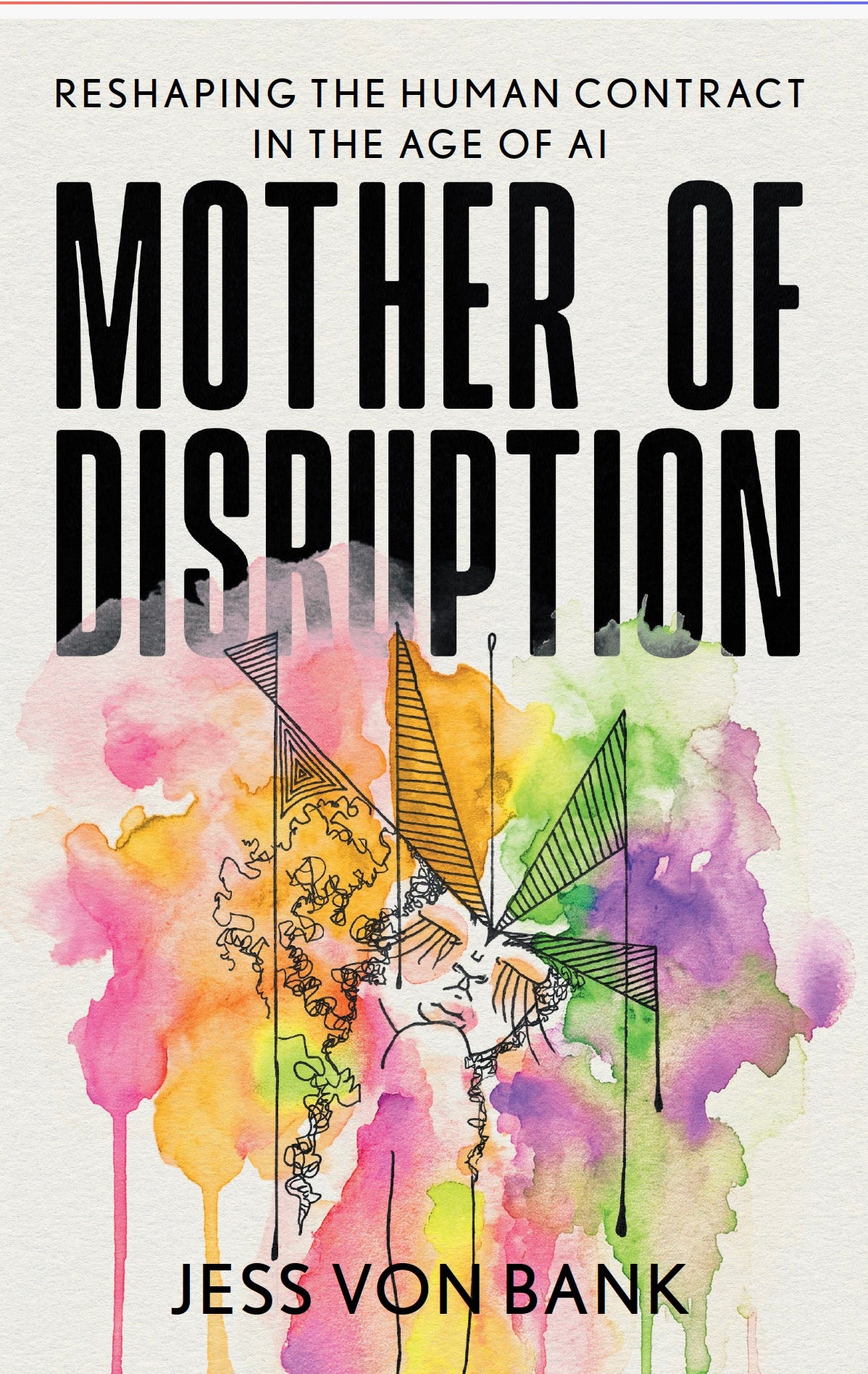
Jess cuts through all the hype and horror about AI and asks the real questions: What do we want our world to be like? What do we want for our kids? How do we want work to work? These are much bigger questions than what do we do with AI, although AI is a great context to talk about them.
Fundamentally, AI is math, data, and some fancy computing. It’s a tool, not a person or a god. It can be confusing when a machine is designed to seem like a person. At the same time, AI is powerful and we need to take care how we use power, all sorts.
Jess starts with a clear description of where we’re at, especially where women and mothers are at. Despite over 60 years of laws protecting against gender and pay discrimination, the bulk of power is still held by men who are generally perfectly happy with things staying that way. LOL. Watch out. Women (and many men) are done with that.
If you don’t believe me, try this little experiment. See how many days the news does not report some form of sexual assault or abuse on women or children by men. I’ve been tracking it for months and so far, it’s zero.
And while it is tempting to talk about the problem and rant, I’d rather tell you about Jess’s solution. She says it’s time to design systems (BTW everything is a system) that are human friendly. Not just for women, but for everyone. She points out that humans are fighting for their own relevance. It’s true.
The blueprint includes having hard conversations, building trust, and shifting the priority from productivity to people. It’s time to stop asking “what can we do with this data?” to “what world do we want for ourselves and our children?” We need to reorient to a world that works for everyone, not just a few. And it’s not too late.
But we need leadership, clarity, and some solid rules to live by. And we need to stop working long enough to ask what we are working towards and working for.
The rule I would add to Scott’s book and Jess’s blueprint for disruption is, be brave. Change is hard and it takes courage. But we’re worth it. We all deserve better.
Both books will be out soon. Pre-order them now. Future you will thank you.